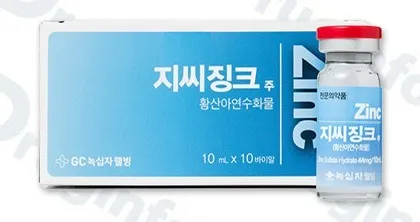
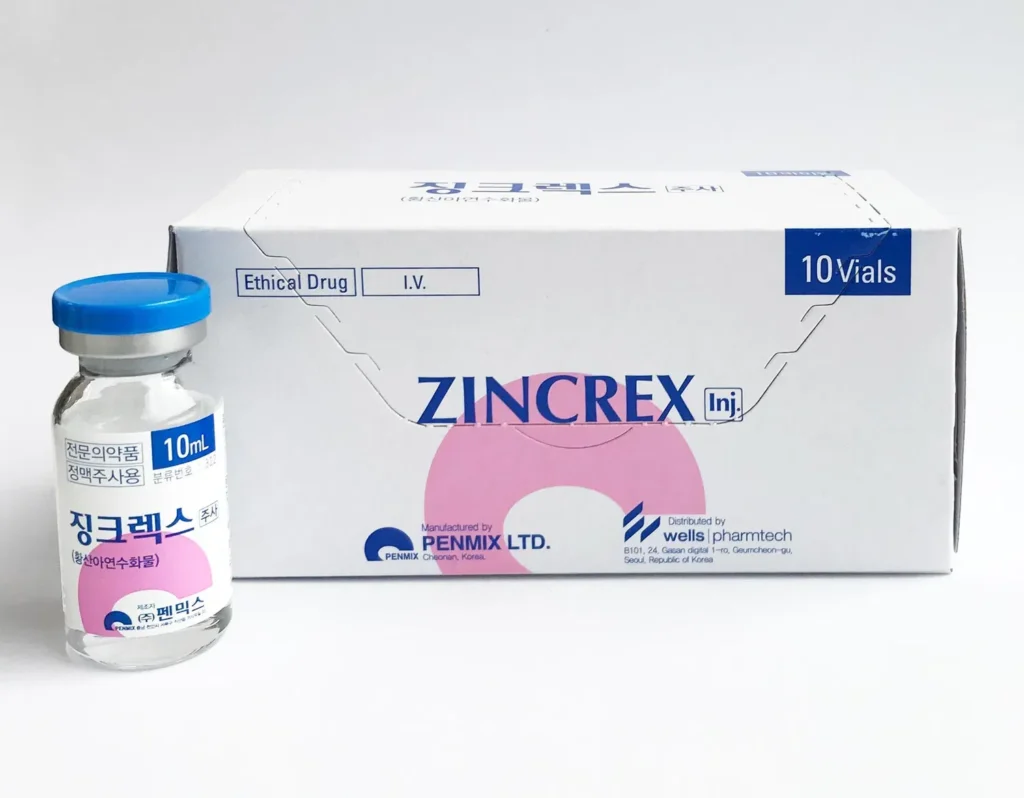
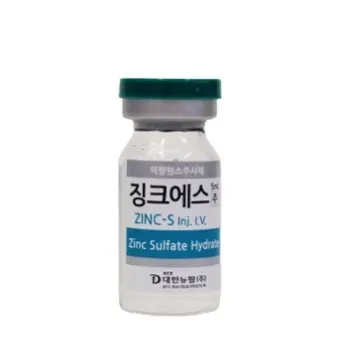
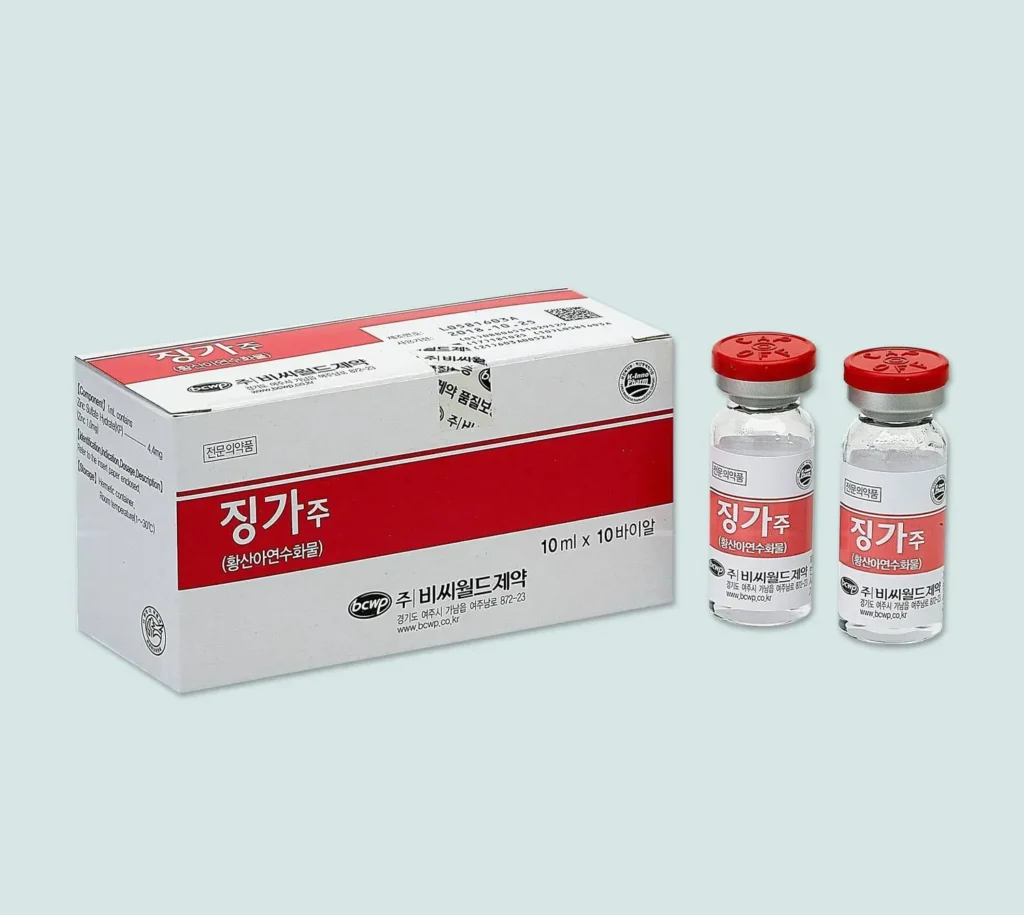
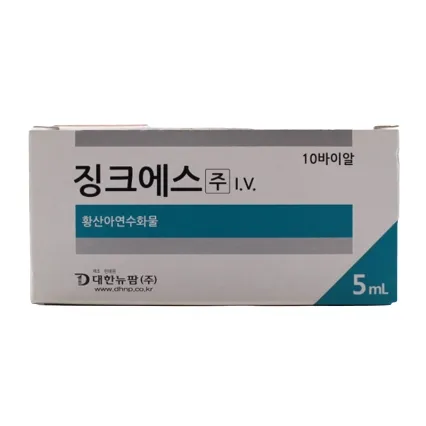
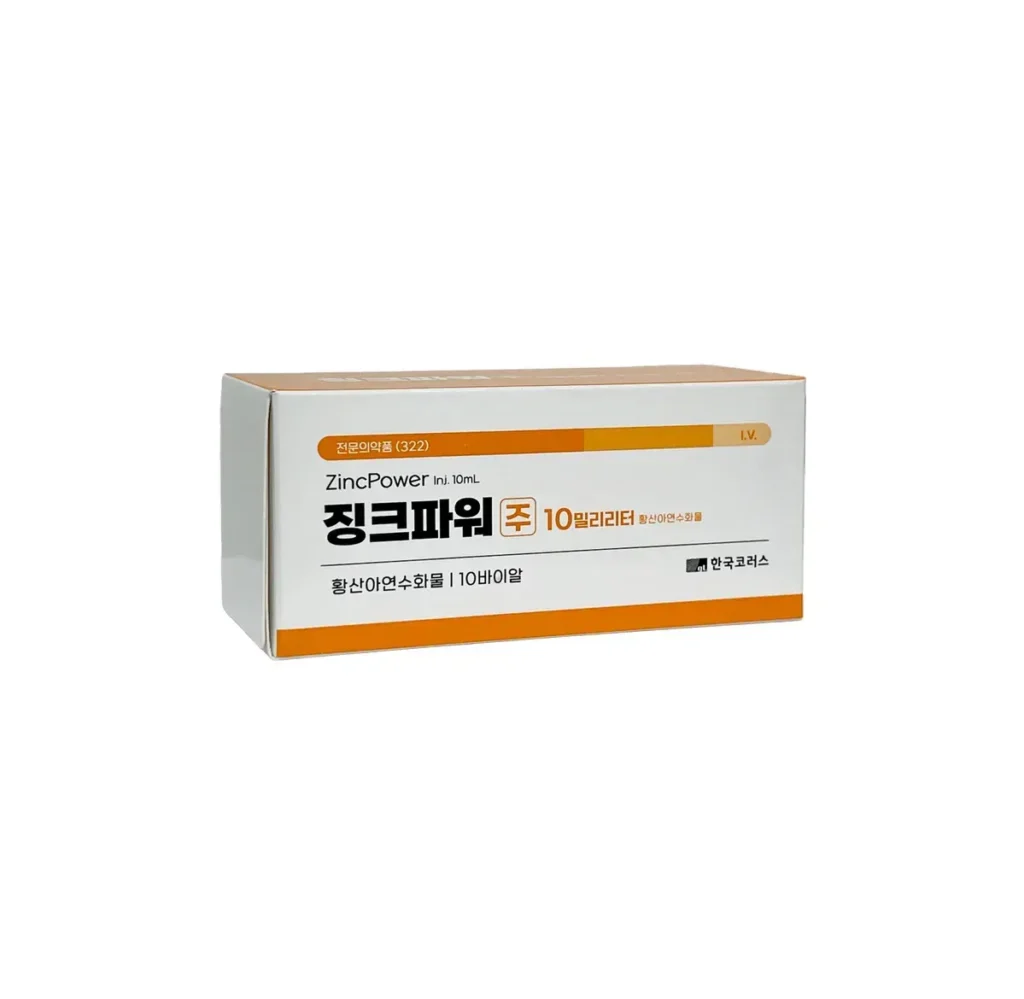
Basic Info.
| EINECS | 231-793-3 |
| Certification | ISO9001 |
| Classification | Organic Chemicals |
| Appearance | Liquid |
| Transport Package | 10vias/Box |
| Trademark | GC |
| Production Capacity | 50000boxes/Month |
| Environmental Protection | Yes |
| Color | Transparent |
| Function | Skin Repair |
| Zinc Sulfate Hydrate | 4.4mg/Ml |
| Specification | 10ml |
| Origin | Korea |
Product Description
Zinc inj helps supplement zinc in parenteral nutrition therapy (TPN).[Ingredient drug and quantity]
Zinc sulfate hydrate … … … … … … … … … … 4.4 mg/ml[Efficacy · Effect]
Zinc supplementation in parenteral nutrition therapy (TPN)[Precautions for use]1. Warning This drug should not be administered undiluted directly into a peripheral vein. Direct peripheral intravenous administration has the potential to increase renal loss of zinc due to phlebitis or bolus injection.2. Adverse reaction Since the zinc content of this drug is very small, there are few symptoms of toxicity from this drug.3. General Precautions 1) When mixing this drug with TPN solution, it is preferable to perform it in laminar flow to maintain sterility. 2) For parenteral drugs, visually check whether there is any sediment or discoloration before administration. 3) Administration of zinc in the absence of copper may cause a decrease in plasma copper concentration. Measure the plasma concentrations of copper and zinc at regular intervals and refer to the next dose. 4) This drug is excreted through the small intestine and kidneys. In patients with excretory organ abnormalities, zinc retention should be considered.
4. Administration to pregnant and lactating women1) Safety in pregnant women has not been established. When administering this drug to pregnant women or women who may be pregnant, administer this drug if it is judged that the therapeutic benefits outweigh the risks. 2) Zinc crosses the placenta and is found in breast milk.
5. Treatment in case of overdose This is a symptom that occurs when zinc sulfate is administered orally (30 ~ 44 g) and can lead to death. These symptoms include nausea, vomiting, dehydration, electrolyte imbalance, dizziness, abdominal pain, lethargy and ataxia. When 1 to 2 mg/kg of zinc was administered intravenously to adult leukemia patients, no toxic symptoms were observed. The normal plasma concentration of zinc is about 88 ~ 112 ug/100 mL, and the concentration of zinc in plasma causing toxic symptoms is unknown. Calcium supplementation is known to have a preventive effect on zinc toxicity.
6. Storage and handling precautions 1) Keep out of reach of children. 2) Store this drug in a packaged state at room temperature in a dry place. 3) This drug does not contain preservatives. Discard unused parts
| Ingredient | Specification | Package |
| Zinc Sulfate Hydrate | 4.4mg/ml | 10ml*10vials |